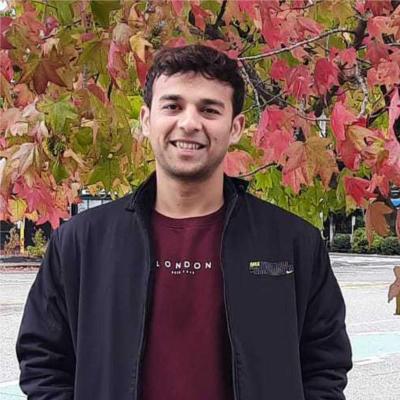
Hi, I'm Nitesh.
I build AI infrastructure that survives production. Right now I own the agent runtime at Sarvam processing millions of daily interactions across enterprise deployments—WhatsApp, Slack, and Web—after shipping geospatial models at Amazon and publishing research at IIT Madras. But the credentials only tell part of the story.
I grew up in a Sindhi business family—the kind where you learn margins over dinner and watch your relatives renegotiate supply chains over chai before the banks even open. Shops reinvented themselves overnight when things broke, long before anyone in tech called it “pivoting.” That gave me something a CS degree alone doesn't: an instinct for what survives vs. what just demos well.
That instinct has guided every step. In research, I built PlotQA—28.9M question-answer pairs over 224K+ scientific plots, published at WACV and AAAI—under Mitesh Khapra and Pratyush Kumar (now co-founder of Sarvam) at RBCDSAI, sponsored by Google.
At Amazon, I shipped address parsing and geospatial models across 10+ markets—digging into why deliveries fail when an “address” is a set of landmarks and local references. That work fed into Project Wellspring, Amazon's generative AI mapping system. 4 papers in 2 years ( ACM SIGSPATIAL + internal ML conference).
At Sarvam, I joined early because I recognized the pattern: a real problem, a clear path to revenue, and a team that ships. My agent runtime handles millions of daily interactions—the durable orchestration layer where LLM reasoning meets tool execution, memory retrieval, and structured output, with each step individually recoverable. I built the MCP gateway, a long-term memory service, an autonomous scheduling engine, and the real-time analytics layer underneath it all.
I apply the same instinct to my own products. Every exam prep app I found was paywalled, ad-riddled, or upselling ₹50K coaching—so I built Tayari: AI-powered prep with 15+ years of PYQs, 2,200+ flashcards, spaced repetition. Grew organically to 2,000+ students who keep calling it “buttery smooth.” If the UX isn't seamless, the engineering underneath doesn't matter.
I'm a father—which changed how I think about timelines and what's worth building. I want my kids to grow up in a world where AI makes people more capable, not more dependent—and where the builders cared enough to get the details right. Right now I'm deep in multi-agent systems, consumer behavior, and looking for the next zero-to-one problem worth a decade of attention.